The Money Conversation DFW Couples Keep Putting Off (Hint: It's Not the Rent)

Couples who relocate to DFW from a state with income tax almost always do the same napkin math on the way in: no state income tax means more take-home pay, and Texas housing looks cheap compared to the coasts, so the move should feel like a financial upgrade across the board. For the first year or two, it often does. Then the property tax bill arrives, the homeowners insurance renewal comes in noticeably higher than last year, and the couple who thought they'd solved their money stress discovers they've just relocated it.
Where the math stops working
Texas makes up for no income tax with property taxes that run well above the national average, and DFW's home values have climbed fast enough in recent years that even a modest annual appraisal increase can mean a real jump in what's owed, regardless of whether the couple's income moved at all. Add homeowners insurance premiums that have risen sharply across North Texas due to hail and severe weather claims, plus HOA dues that are close to a given in most newer suburban developments, and the "no income tax" advantage that looked so clean on the way in gets absorbed by costs that don't show up on a single line item anyone budgeted around up front.
That doesn't mean the move was a bad financial decision. It usually means the couple never revisited the original math after the first year, and kept operating off a mental model of their finances that stopped being accurate a while ago.
Why this becomes a relationship problem, not just a budgeting one
Money conversations rarely stay purely financial. When a couple's actual cost of living creeps up gradually instead of announcing itself all at once, it's easy for the resulting stress to surface as tension over something else entirely: a disagreement about a purchase, an argument about who spends more, a general low-grade irritability that neither partner can quite trace back to its source. By the time someone finally sits down and adds up the real numbers, there's often a real gap between what each partner believed their financial picture looked like, and that gap itself becomes something to work through, on top of the numbers.

What tends to actually help
Revisiting the full cost picture once a year, not just once at move-in. Property appraisals, insurance renewals, and HOA increases all tend to land at different points in the calendar, which makes it easy to absorb each one individually without ever stepping back to see the combined trend. Picking one month a year to lay out the full picture together catches the drift before it becomes a crisis.
Separating "we make good money" from "we have margin." Plenty of dual-income DFW households have strong salaries and very little actual breathing room once fixed costs are accounted for, and the gap between those two things is exactly where financial stress tends to live for a long time before it surfaces as conflict.
Being specific about what each partner assumed the move would fix. One partner may have believed the move solved their money stress permanently. The other may have always seen it as a temporary advantage that would erode as the area grew. Neither read is wrong, but a couple operating on two different unstated assumptions is more likely to blindside each other when a bill comes in higher than expected.
Naming financial stress as it builds, instead of letting it stay unspoken. A gap most couples don't notice forming until it's already large enough to cause an argument tends to grow the same way: neither partner mentions the small increases as they happen, so the full size of the change never gets discussed until it's unavoidable.
Treating property tax protest season as a real, recurring task, not an afterthought. Contesting the annual appraisal is a normal, often effective part of Texas homeownership, and couples who build it into their yearly routine, rather than letting the deadline slide past, tend to keep more control over one of the biggest and most unpredictable line items in their budget.
The honest bottom line
The financial upside of moving to DFW is real for plenty of couples. What tends to trip people up isn't the move itself, it's assuming the math that made sense in year one still holds by year four, without ever sitting down together to actually check. The same unspoken-number problem shows up even earlier for a lot of couples, back when a booked-out venue pushes the wedding budget past whatever either partner actually agreed to. For couples who still rent, the first joint lease is often where this conversation should have started.
More on Marriage
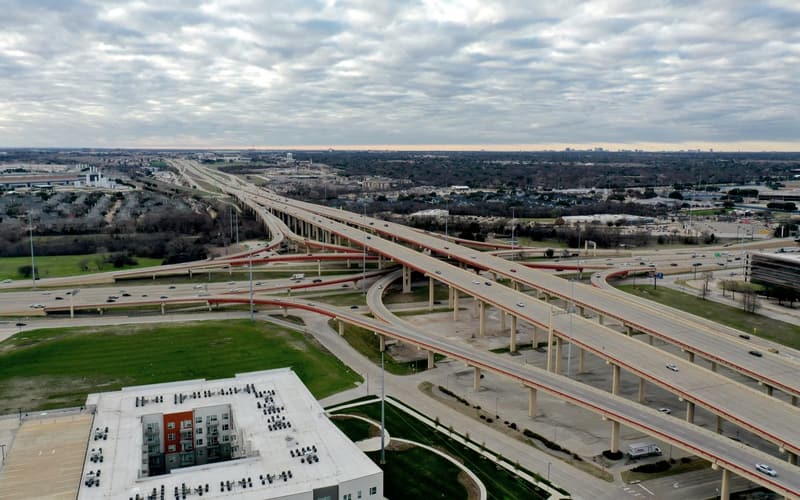
The Property Tax Fight: Why January Bills Hit DFW Marriages So Hard
Texas has no state income tax, but DFW couples still feel the bill. Property taxes turn homeownership, fairness, school districts, and lifestyle pressure into one annual marriage conversation.
7 Signs It May Be Time for Marriage Counseling in Dallas
Most couples do not wake up one morning suddenly needing help. In Dallas families, the signs usually show up in the car, the calendar, the budget, and the quiet routines that stop feeling safe.

When Your DFW Marriage Runs on Errands Instead of Conversation
Some DFW marriages don't blow up. They disappear into pickups, toll statements, returns, and HOA email, until the only language left in the house is the to-do list.